Caution: AI-Cowriting Experiment!!
In recent posts I (Jon) have experimented with an AI-cowriting workflow that starts with me writing something without AI, usually by stepping away from any real computer and using a Remarkable. I then ask an AI to convert my first draft PDF to a Quarto index.qmd file to form a blog post. Then I ask the AI to do some copyrighting, and sometimes to make some fact checking contributions through clearly self-declared notes. This recent workflow is a lot of AI, but still fundamentally starts with me writing something.
The blog post below is different, hence the co-authorship. This post began with a phone-based chat with Claude Opus, discussing a documentary series that - for hopefully obvious reasons - was somewhat morbidly fascinating. Claude Opus (Web-based) then drafted a blog post based on the discussion, with Claude Code (laptop-based) then doing the small amount of conversion work required to turn this into a Quarto blog post.
So, with this post the relative balance between Claude and Jon is inverted, with the Claude agent now taking the lead. To finalise the inversion, I (Jon) won’t edit Claude’s text any further, but will occasionally add some additional ideas and arguments through footnotes.
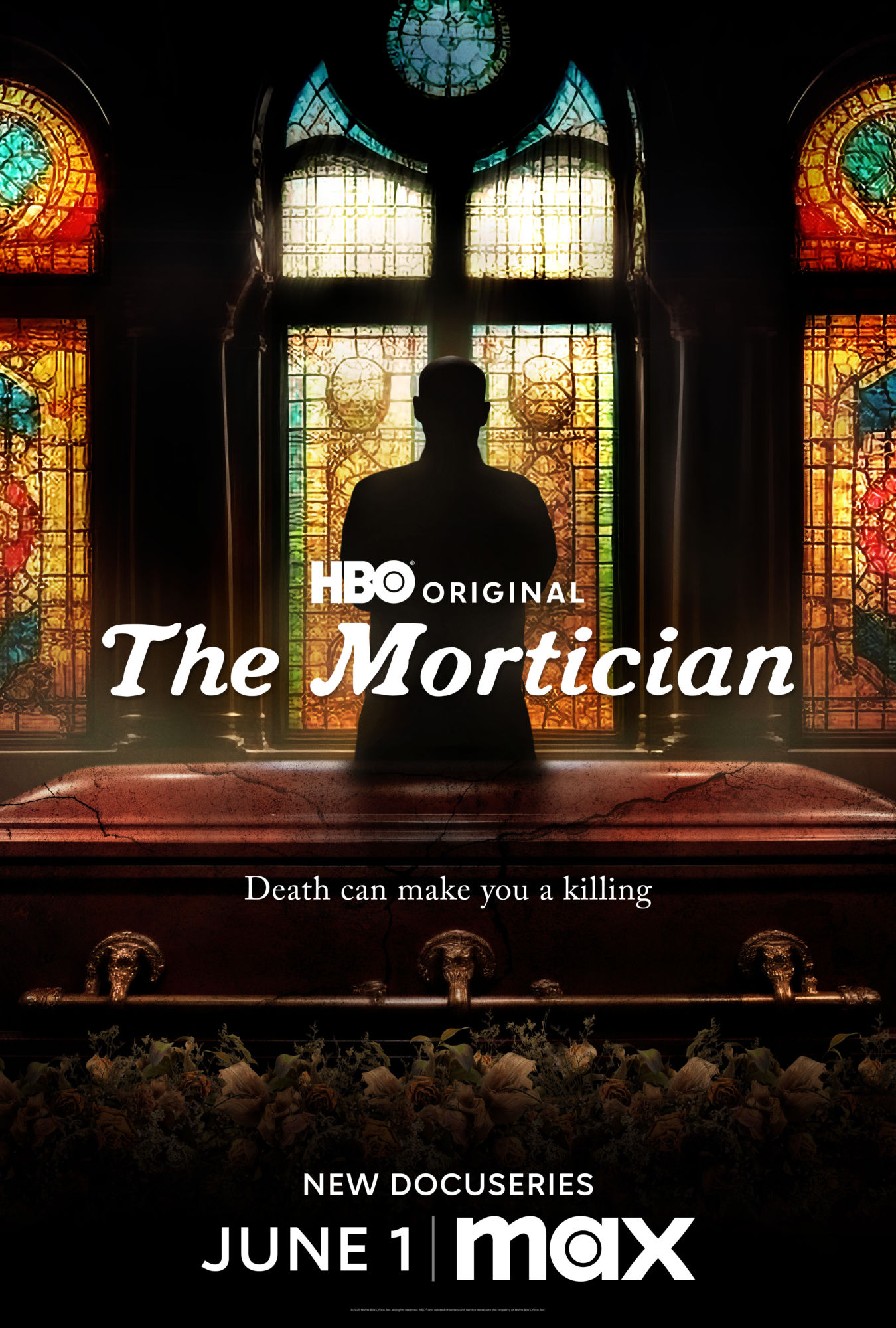
I recently watched a documentary about a remarkable entrepreneur who revolutionised his industry. He slashed the cost of his services, making them affordable to customers who might otherwise have struggled—all while delivering an end product indistinguishable from his competitors’. He made his business dramatically more energy-efficient than the industry standard. And with the help of his family, he found ways to use byproducts from his operations—material that would otherwise have gone to waste—to help people with desperate healthcare needs, supplying medical schools and research institutions with vital resources. Amazingly, he managed all this while growing his business exponentially and turning a healthy profit year on year.
For this, he was rewarded with prison sentences totalling over a decade.
His name was David Sconce, and he is the central figure in HBO’s 2025 documentary series The Mortician, which chronicles the scandal that engulfed his family’s funeral business, the Lamb Funeral Home in Pasadena, California.
Everything in those opening paragraphs is, in a narrow factual sense, true. That it feels obscene to frame it this way is precisely what interests me.
The facts of the case
The Lamb Funeral Home was founded in the 1920s and became a trusted Pasadena institution. In the early 1980s, David Sconce took over the cremation side of the business and saw an opportunity. He offered cremation services at $55 per body—a fraction of what competitors charged. Funeral homes across Southern California began sending him their cremation work. Business exploded: from 194 cremations in 1981 to over 8,000 by 1985.
How did he achieve this? By cremating multiple bodies simultaneously—sometimes fifteen or more at once. By his own account, one body took two hours to cremate; ten took two and a half hours. The economics were transformative. He also established an organ and tissue bank, harvesting corneas, hearts, brains, and other organs from bodies in his care—without consent—and selling them to medical schools and research institutions.
When the operation was finally exposed (a WWII veteran living near one of Sconce’s facilities recognised the smell of burning flesh from his time liberating Auschwitz and called the police), Sconce pleaded guilty to 21 counts including mutilating remains. He served around two and a half years. He later returned to prison for probation violations and remained there until 2023.
The documentary also explores the alleged murder of Tim Waters, a competitor who was investigating Sconce’s practices. Charges were eventually dropped when toxicology findings proved unreliable. Sconce’s former associates claim he bragged about the killing—though it’s worth noting that these witnesses were themselves facing criminal exposure and had strong incentives, via plea negotiations, to offer testimony implicating their employer in the most serious possible crimes. Second-hand confessions from co-conspirators seeking leniency are not strong evidence.
The monster narrative
The Mortician frames Sconce as an aberration—a “bad apple” whose crimes shocked an otherwise ethical industry. The documentary lingers on his flat affect, his complete lack of remorse, his chilling statements. “I don’t put any value in anybody after they’re gone and dead,” he tells the camera. “Love ’em when they’re here.”
This framing is comforting. It localises evil in a single deviant individual. It suggests the system worked—eventually—and that safeguards now prevent such abuses. The National Funeral Directors Association appears in the documentary to reassure viewers that Sconce’s actions “are not indicative of the business itself.”
But I want to sit with the discomfort of that opening framing a little longer.
The efficiency was real
Sconce’s cost savings weren’t illusory. If one cremation takes two hours of fuel and ten take two and a half, you’re looking at roughly a 75% reduction in energy costs per body. Those savings could, in principle, benefit grieving families facing unexpected expenses at their most vulnerable moment.
The organs he harvested—1136 brains, 145 hearts, 100 lungs in just three months—went to legitimate medical schools and research institutions. They presumably contributed to the training of doctors and the advancement of medical knowledge.2 People may be alive today because of research conducted on tissue Sconce supplied.
The scandal led to sweeping regulatory reforms: mandatory unannounced inspections, stricter licensing, felony penalties for extracting valuables from remains, improved oversight of funeral trust funds. These protections now benefit millions.
So: genuine cost savings, genuine contributions to medical research and education, genuine regulatory improvements. The benefits are not imaginary.
Where, then, is the harm?
Set aside, for a moment, the assault on competitors and the alleged murder—these are serious charges that no framing exercise can rehabilitate if true. Focus on the core cremation practices that affected over 20,000 families.
The families received ashes. The ashes were physically indistinguishable from what they would have received under individual cremation—calcium phosphate, calcium fragments. The ashes were scattered at sea, placed in urns, interred in memorial sites. The rituals proceeded as expected.
The harm, it seems, lies entirely in the knowledge that the ashes were commingled. But this raises an uncomfortable question: what exactly do people believe about ashes that makes commingling harmful?
The dualism we don’t admit to
Here’s where Sconce inadvertently reveals something about the rest of us.
His position is materialist and internally consistent: a corpse is biological matter, not a person. Ashes are chemically identical regardless of their source. Symbolic attachment to specific matter is, from this view, irrational. “That’s not your loved one anymore, and it never has been,” he says.
Most secular, educated Westerners would, if pressed, affirm something similar. We don’t believe in souls. We accept that personal identity ends at brain death. We’d likely reject, as superstition, the idea that remains carry some non-physical “essence” of the deceased.
And yet.
The harm experienced by families who learned their loved one’s ashes were commingled is real. The $15.4 million class action settlement reflected genuine grievance. But this harm requires believing something about remains that strict materialism cannot support—something like: these specific ashes are connected to this specific person in a way that transcends their physical composition.
This is, functionally, a dualist position. The families were implicitly asserting that something non-physical—call it essence, identity, or connection—inhered in the remains. Sconce, lacking the normal affective responses to death that generate such intuitions, saw only the chemistry. He found nothing there.
He wasn’t reasoning badly. He was not having the feelings that most people mistake for reasoning.
An analogy
In the early 1990s, countless packets of “Berlin Wall” fragments were sold to tourists. The total weight of these packets substantially exceeded the weight of the actual wall. Many buyers received concrete that had never been anywhere near Berlin.
Was this fraud importantly different from what Sconce did? Consider the parallels:
- Physical indistinguishability between authentic and inauthentic items
- Value derived entirely from believed provenance
- Deception causing no material harm
- Harm located solely in the gap between belief and reality
You might object that there’s a difference in kind: the Berlin Wall is historically significant but impersonal, while a relative’s remains carry intimate meaning. But notice that this objection also rests on non-material claims—the idea that personal relationship confers some special metaphysical status on matter.
Perhaps the distinction is merely intensity of attachment rather than a principled difference in the nature of the harm.
What the industry knew
There’s another discomforting angle that The Mortician largely avoids: the complicity of Sconce’s customers.
Funeral homes across Southern California were sending him bodies for cremation at $55 when the going rate was several hundred dollars. His volume—over 8,000 cremations annually from a two-oven facility—was physically impossible under standard practices. Anyone in the industry could have done the arithmetic: two ovens, sixteen hours of operation per day, twenty-two cremations daily. The numbers only work if you’re batching.
The fellow morticians who appear in the documentary wax nostalgic about how ethical the industry was before the scandal. None of them reflects on why their colleagues were so keen not to question why the cost of cremation had suddenly dropped by three-quarters.
This is wilful3 blindness—the deliberate choice not to investigate when you have strong reason to suspect wrongdoing. The funeral directors who used Sconce’s services pocketed the difference (presumably still charging families full rates), maintained plausible deniability by not asking questions, and then positioned themselves as ethical victims when the scheme collapsed.
The “bad apple” narrative serves the barrel. The documentary, by focusing on Sconce as singular monster, inadvertently reinforces the industry’s preferred framing.
The phenotype that won’t go away
There’s a reading of Sconce through evolutionary psychology that I find clarifying, if uncomfortable.
Certain personality traits—low affective empathy, high instrumental reasoning, comfort with rule-breaking—persist in human populations at low but stable frequencies. This is consistent with frequency-dependent selection: such traits are advantageous when rare (allowing exploitation of inefficiencies, willingness to do work others find intolerable)4 but disadvantageous when common (cooperation collapses, trust becomes impossible).
On this model, people like Sconce will always exist at some base rate. They will always find and exploit niches with weak oversight. The goal isn’t elimination but management—keeping the frequency low enough that cooperation remains viable.
This is considerably less satisfying than “evil man punished, problem solved.” It suggests an ongoing evolutionary arms race between exploitative strategies and social countermeasures. Each scandal triggers an immune response that closes that particular niche but doesn’t prevent exploitation of others.
Sconce, on this view, is less a monster than a predictable failure mode—one that any system with insufficient oversight should expect to encounter eventually.
The question that won’t resolve
I’m not arguing that Sconce’s crimes were good, or that the families’ grief was irrational, or that fraud becomes acceptable when undetected. The assault on competitors was straightforwardly wrong. If the murder allegations are true, that was worse still.
But the core cremation practices—the ones that affected 20,000+ families—expose something uncomfortable about moral intuitions many of us hold without examination.
We claim to be materialists but experience harm that only makes sense under dualist assumptions. We valorise efficiency in other contexts but find it obscene when applied to death. We condemn Sconce’s deception while ignoring the industry-wide wilful blindness that enabled him. We prefer monster narratives to systemic critique because they let us believe the problem has been solved.
Hannah Arendt famously wrote of “the banality of evil”—the idea that atrocities can be committed by ordinary bureaucrats through mere thoughtlessness. The Sconce case suggests something like the inverse: that certain crimes can inadvertently expose the thoughtlessness in our moral frameworks.
Sconce isn’t banal. He’s too consistent. And that’s its own kind of disturbing.
The Mortician is available on HBO and Max.
End Experiment
So, how was that? Aside from the em-dashes, could that have been me (Jon) writing? Does Claude write better than me?
Anyway, if you want to see where this started, the chat transcript is available here.
Footnotes
Jon Note: Ah! The infamous em-dash!↩︎
Jon note: A lot of corneas were extracted too. I suspect some tissues were used in living patients, perhaps even helping people to see.↩︎
Jon note: ‘willful’?↩︎
Jon note: As a vegetarian, but mindful that most people aren’t, is it ultimately better that people working in abattoirs hate their job, are indifferent to their job, or love their job?↩︎